01
On-hire and off-hire don't line up
Different depots, checkers and formats make comparing condition at return with condition at pickup manual work.
For container owners and leasing companies
On-hire and off-hire inspections decide what a lessee pays for. Plomba records both on the same coordinates and codes, so the off-hire walk-around starts from the on-hire damage and you can recharge with evidence.
What gets in the way
01
Different depots, checkers and formats make comparing condition at return with condition at pickup manual work.
02
Lessees push back on damage charges they can't see the evidence for.
03
Condition lives in depot reports, emails and spreadsheets, not in one place per container.
What Plomba gives you
The off-hire walk-around shows the on-hire damage on the same spot. Anything else is new, and coded to ISO 9897.
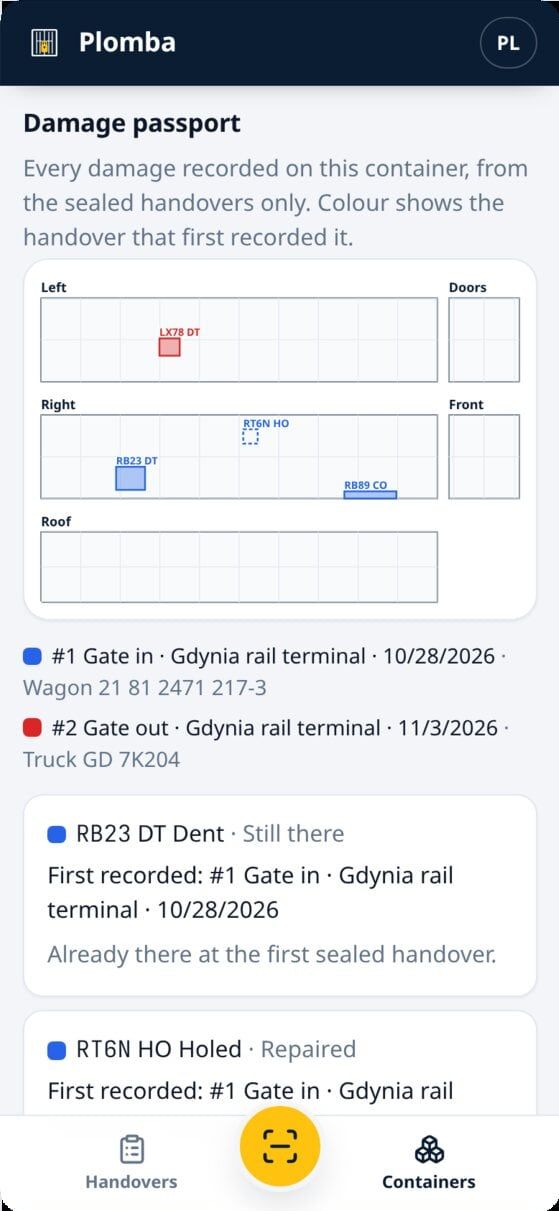
Each new damage has its photo hash, its CEDEX location, damage and component codes, and the handovers between which it appeared.
The damage passport shows every damage a container has had, when it was first recorded and whether it was repaired.
Self-host Plomba or use Plomba Cloud, and pull sealed records into your fleet system over the API.
How it fits in
Keep a condition view of the fleet in the system you already run.
Pull each container's sealed history over the REST API.
Receive handover.sealed webhooks for on-hire and off-hire handovers at the depots you work with.
Attach the EIR and the evidence to a recharge.
examples/leasing-fleet-condition
A fleet condition report by owner code, and the damage that appeared between on-hire and off-hire.
Damage claims backed by a sealed record from every handover, and CODECO gate messages that point to the evidence.
Condition at both ends of the rail leg, with the wagon each container rode on, checked fast when a train arrives.
A receipt the driver can show at the next gate, with the photos and the damage recorded at pickup.
The same walk-around for every checker, standard codes without a codebook, and a CODECO for every sealed handover.
Join the Plomba Cloud waitlist, self-host it today, or write to us for an access code to the live demo.